A Rabbi, a Minister and an Iman walk into a bar--sounds like the beginning of a joke, eh? Rather it was the beginning of an interfaith holy friendship.
Theologian Gregory Jones describes holy friends as those who challenge the sins we have come to love, affirm the gifts we are afraid to claim, and help us dream dreams we otherwise would not dream.

In August 2019 I traveled over twenty thousand miles with new holy friends, an Indonesian Iman from a Muslim boarding school, in suburban Jakarta, Indonesia and a Presbyterian minister from a suburban church in Wellington, New Zealand as part of
1000 Abrahamic Circles interfaith initiative, a project coordinated by the Foreign Policy Community of Indonesia and funded by the Kingdom of Denmark It was
besherte (fortuitous) that both my fellow travelers' nicknames had Hebrew homonyms, Rev Raz (Hebrew for "secret") and Iman Ozy (Hebrew for "my strength"). I wondered what secrets would be revealed and what strengths discovered during our three weeks traveling together, living in each other's homes, and meeting each other's families, and praying in each other's houses of worship. I was intrigued to travel to New Zealand to see the healing work after the Christchurch mosque massacre. I was concerned about being a Jew in Indonesia, the largest country of Muslims in the world (250 million)--a country that does not recognize Judaism as one of it's six major faiths, has only one isolated synagogue and has no diplomatic relations with the state of Israel.

This diplomatic reality was not lost on us as the Genesis pilot circle of a thousand future triads when we spent our first evening together at an AIPAC (American Israel Pubic Affairs Committee, the pro Israel American lobby) event where we met Yonathan Weintraub, the co founder of SpaceIL, the private Israeli space agency. He shared the incredible story of the Beresheet (Hebrew for Genesis) lunar lander that (crash)landed on the moon earlier this February that was designed to stimulate Israeli STEAM (science, technology, engineering, arts and mathematics). As the image flashed of the SpaceX Falcon 9 rocket which took the Beresheet into space from Cape Canaveral, Weintraub noted the "Uber Pool" ride feature where Indonesia’s first communications satellite, Nusantara Satu, (Indonesian for One Archipelago) shared the same capsule for an affordable launch. Despite the lack of formal diplomatic relations, by traveling together, the pioneering satellites from Israel and Indonesia literally reached the heavens. If tiny Israel could promote outer space to inspire one million children, internationally could 1000 Circles truly reach our goal of fostering interfaith understanding for a quarter of a million through 1000 triads of influential religious leaders?

Our adventure together began the minute we met each other at Denver International Airport when Iman Ozy arrived. Within five minutes of landing, Ozy asked to find a place for afternoon prayers. We went to the Muslim prayer space of the Denver airport interfaith chapel. While I had visited the Jewish/Christian chapel before, I had not entered the Muslim chapel. Rediscovering your own city through the eyes of another, reminded me of Aristotle's dictum that a friend is another self. With my new friends we visited, worshiped and dialogued with congregants not only at my synagogue, Temple Emanuel, but also at an African American mosque and at an AME (African Methodist Episcopal) Church and met with their clergy. While I knew these clergy from interfaith advocacy work in town, I had not visited their houses of worship and nor experienced first hand their prayer services.

I discovered that Muslims take their prayer life very faithfully as they pray at least five fixed times a day. I literally awakened to this insight when, at the pesantren Islamic boarding school, we were awakened every morning at 3:15 am in order to prepare for the muezzin's calls at 4 am summoning the faithful to worship. As we drove from the suburbs to our appointments immersed in the horrendous traffic of Jakarta, a city with a similar population of my entire native country Canada, our drivers would frequently pull to the side of the road for the required prayers. Ozy's spiritual strength flowed from his adherence to the daily structure in following shariya, the Islamic legal path which sanctifies every aspect of their lives. Of course, in Indonesia it was seamless to follow Islamic law as it seemed like all the food was Halal, something I relished when I ordered the breakfast sausage at an Indonesian McDonald's knowing it wasn't pork. In Colorado, Ozy could eat kosher food in a pinch, but we made efforts for him to keep his dietary laws by going to Halal restaurants as much as we could. Respecting each other's religious practice was an implicit prerequisite of our relationship.

Each participant emphasized a different religious aspect: for Ozy, practice; for Raz, faith. While many Jews certainly follow Jewish law and articulate Jewish theology, my holy friends' religious intensity affirmed the spiritual gifts that perhaps, I was was afraid to claim. No topics were off limits as well. Raz challenged me on Israel's treatment of the Palestinians, our doctrine of peoplehood, and the Jewish concept of sin for our dialogues were open, thoughtful and respectful.

As we broke bread together we broke down barriers of curiosity and ignorance--and confronted prejudice. What were the hidden secrets about Jews in a country where they knew very few or no Jews at all? Driving back from synagogue in Denver with my wife Hilary, Ozy asked how it was that Jews controlled the American government. When I later asked Indonesians who had never met a Jew how many they thought lived in the USA, they replied that they thought up to a quarter of the population was Jewish, instead of the reality of about 2%. But Ozy was not the only one with prejudice as I confessed my stereotype of Muslim women hiding behind hijabs (head coverings). Ozy shared with me the women's role in Islam. He told me that his wife owns the house and controls the salary that he sends home. Before going to Indonesia, I only saw the hijabs, now I see the smiles behind the coverings.

In Wellington, New Zealand we visited the Holocaust Centre at the local Jewish Community Centre where they proudly told us that The Diary of Ann Frank, part of the school curriculum, had just been translated in Maori, the indigenous language. I was shocked when Ozy told me he had never read this book nor really knew much about the Holocaust that was never taught in Indonesian schools. I now understood how important it was to share with him my story so that he in turn could teach his students to magnify our experience of understanding and appreciation and not merely "tolerance," as Raz repeatedly challenged us to condemn as insufficient.

I learned that interfaith dialogue involves not just finding answers in commonality, but asking good questions as well. It necessitates listening deeply with not just the mind, but the heart. It also meant trying to withhold judgment about differences, searching for similarities, and looking out for one another. We saw the latter when we visited the Wellington mosque on Friday and were greeting by Rick S, a member of Temple Sinai synagogue, who, after the terrorist tragedy last March in Christchurch, committed to stand outside the mosque entrance every Friday in order to keep a look out so that the Muslims might pray safely. The Muslims welcome and feed him as they enter the mosque for prayers.

Can a tragedy turn into a blessing? When we visited the Al Noor mosque in Christchurch we heard how their neighbors whom they never knew, offered shelter to the worshipers fleeing the massacre. Now, each Wednesday, people who had never known each other gather weekly for food and fellowship. The Christchurch mayor talked about the opportunities for building interfaith understanding and tolerance and the challenge of spending the funds that came into the community. This included $900,000 donated by the Jewish Federation of Pittsburgh six months after the Tree of Life tragedy in October of 2018.


Lastly, I learned about the importance of knowing what pains each other in order to deepen our understanding. Not surprisingly, for Jews it is anti-Semitism, for Muslims, it is Islamophobia, but for Christians it is secularism and Christianophobia. The shocking reality that Raz shared with us is that Christians are now a minority in secular New Zealand. His youth group members are made fun of for their commitment to faith All three religions have seen a shocking rise in hate attacks . All continue to mourn deeply for those Jews lost at Chabad of Poway in San Diego, and at Tree of Life synagogue in Pittsburgh, as well as the horrifying anti-Muslim attacks in Christchurch, New Zealand and the anti-Christian bombings on Easter Sunday in Sri Lanka, to name but a few, this past year.

We thought we had stories in common in our sacred Scriptures. We soon discovered that although we had the same patriarch, Abraham, Avraham or Ibrahim depending on linguistic pronunciation, his two sons' stories differed. In the Hebrew and Christian Scriptures, Abraham's test of faith was the binding of Isaac, in the Koran, the sacrifice of Ismael. As is typical, both sons experienced sibling rivalry. Yet, Abraham loved both his sons who followed in his monotheistic legacy that inspired our journey, a dream of deep interfaith understanding.

I thank Temple Emanuel Denver for giving me these three transformative weeks, Ambassador Dr. Dino Patti Djalal, the founder and CEO for his vision and diligence, the 1000 Abrahamic Circles Secretariat for their detailed labor, the Danish government for their funding, and our gracious hosts, Ambassador Roy and Dawn Ferguson in Wellington, Dr. Budi Rahman Hakim of Jagat Arsy Boarding School in Jakarta, and Consul Stanley Harsha in Denver, for giving me the privilege of traveling to, living with and learning from the progeny of Abraham for a "family reunion".
While our biblical stories diverge, we found a happy ending to our collective story at the end of Abraham's life when Isaac and Ishmael come together to bury their father (Genesis 25:8-9):
"Then Abraham breathed his last and died at a good old age, an old man and full of years; and he was gathered to his people. His sons Isaac and Ishmael buried him in the cave of Machpelah near (Hebron)..."
After all the acrimony, the children reconciled to bury their father. May we bury our animosities, fears and prejudices just as Isaac and Ishmael did as brothers and as we did as holy friends.


As Rabbi Jonathan Sacks notes: "For though my faith is not yours and your faith is not mine, if we each are free to light our own flame, together we can banish some of the darkness of the world!" In the beginning words of Genesis, for which our pilot Circle was named, "Let there be light!"


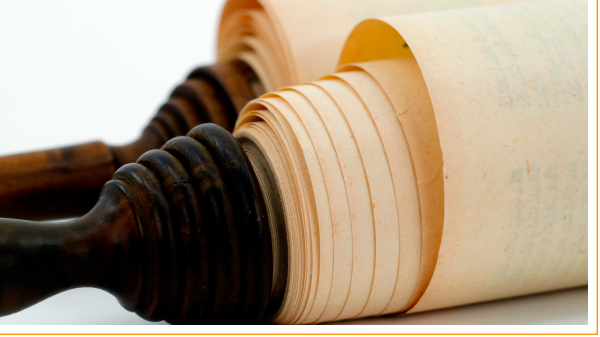 What book would you use to begin teaching Judaism to a child? According to tradition, it is none other than “Leviticus.” This middle book of our Pentateuch, Vayikra, is known as the Torat Kohanim, the Torah of the kohanim or priests, and of the Levites from which we get the English name of the book, Leviticus. The Levites were the priests’ assistants from the tribe of Levi (as in the popular brand of jeans, “Levis,” invented by a Jewish peddler, Levi Strauss, for the prospectors of the California Gold Rush).


 " This auspicious number kept appearing for me when I read that the


